
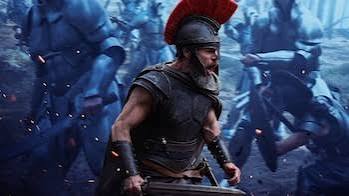
When news broke that Christopher Nolan would follow his Oscar-winning historical masterpiece Oppenheimer with a $250 million adaptation of Homer’s ancient Greek epic, the film world held its breath. How would a director known for quantum mechanics, timeline manipulation, and relentless realism tackle a 2,700-year-old tale of sea monsters, gods, and mythic wanderings?
The answer arrived in theaters with The Odyssey. clocking in at a gripping 173 minutes and shot entirely using custom 70mm IMAX film cameras. Rather than delivering a conventional sword-and-sandal spectacle, Nolan crafted a visceral, non-linear thriller about trauma, storytelling, family, and the terrifying cost of war.
1. Fractured Time: Nolan’s Non-Linear Spin on Homer
Homer’s original poem is already a complex, framed narrative, but Nolan—working alongside Oscar-winning editor Jennifer Lame—transforms it into a breathtaking temporal map.
The film opens with an intertitle reading “In a time of apparent magic…” before introducing a weary Odysseus (Matt Damon) in a smoke-filled banquet hall, recounting his decade-long struggle to reach home. From there, the narrative fractures across three distinct timelines: 
-
The Fall of Troy: Gritty, chaotic war flashbacks detailing the bloody conclusion of the Trojan War and the infamous trickery of the Trojan Horse.
-
The Mediterranean Wanderings: Odysseus and his dwindling crew battling unforgiving seas, divine wrath, and terrifying physical obstacles.
-
The Siege of Ithaca: Penelope (Anne Hathaway) and Telemachus (Tom Holland) holding down the royal palace as a mob of predatory suitors, led by Antinous (Robert Pattinson), slowly devour their kingdom.
By intercutting these threads, Nolan builds palpable suspense. The danger on the high seas directly mirrors the political desperation in Ithaca, keeping the emotional stakes sky-high from opening shot to final frame.
2. Casting Legend: A Masterclass in Character Power
Nolan assembled one of the most stacked ensemble casts of his career to bring the mythical figures of Bronze Age Greece to life.
3. Technical Mastery: Pure 70mm IMAX Realism
As the first feature film shot entirely on 70mm IMAX cameras, The Odyssey sets a new technical benchmark for cinema. Nolan famously avoids heavy digital CGI whenever possible, opting instead for practical scale and staggering location photography across Europe and the Mediterranean.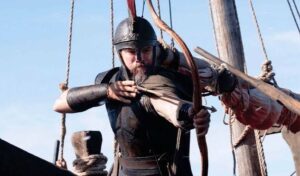
“You can almost smell the salt sea spray, the congealing blood, and the mountain air. The scale isn’t just large—it’s tangible.”
Practical Film Craft Highlights:
-
Practical Creatures & Effects: Rather than relying on green-screen monsters, mythical encounters are staged using massive mechanical puppetry, practical set builds, and clever camera angles inspired by legendary visual effects pioneer Ray Harryhausen.
-
Tactile Warfare: Battle sequences avoid floaty digital armies. Instead, thousands of practical stunt performers crash together in armor, bringing heavy, bone-crunching weight to every clash.
- Immersive Soundscape: Ludwig Göransson’s thunderous, ancient-instrument score combines raw percussion with haunting vocal chants, echoing through IMAX theaters like a sea storm.
4. Bold Artistic Choices and Modern Relevance
Adapting a foundational piece of literature always comes with creative risk, and Nolan wasn’t afraid to make bold decisions that ignited intense film debate.
Drawing inspiration from accessible 21st-century translations—such as classicist Emily Wilson’s groundbreaking English translation—Nolan opted for direct, modern dialogue over archaic verse. The language feels immediate and raw, ensuring the emotional beats hit modern audiences straight in the chest rather than feeling like a dusty museum lecture.
Furthermore, Nolan treats the supernatural elements with psychological ambiguity. Are the gods divine beings intervening in mortal affairs, or are they manifestations of a traumatized king rationalizing twenty years of survival, loss, and terrible choices? This layer of thematic depth keeps viewers questioning reality throughout the journey.
The Final Verdict
Christopher Nolan’s The Odyssey is a cinematic event of the highest order. It honors the ancient oral tradition of storytelling while pushing the boundaries of what modern film technology can achieve. Epic in scope yet intimately human in character detail, it stands as one of the defining blockbusters of 2026.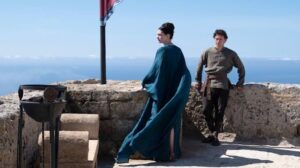
Whether you are a classic mythology enthusiast or simply a fan of immersive visual cinema, The Odyssey must be experienced on the biggest screen possible.