
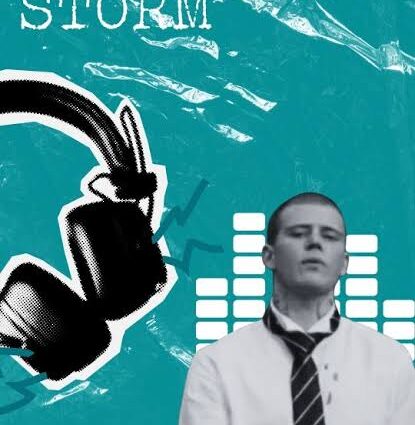
In an era when most music videos are engineered for five-second vertical social media loops, French electronic producer Surkin—operating under his multimedia alias Gener8ion—and Swedish rap icon Yung Lean delivered a six-minute-and-twenty-two-second cinematic triumph. Released on April 24, 2026, as a centerpiece of Gener8ion’s Love & Tears project, “Storm” (structured as the dual-part “Storm Pt. I & II”) immediately shattered expectations of what a modern music visual could achieve.
Directed by acclaimed filmmaker Romain Gavras and choreographed by visionary movement artist Damien Jalet, the short film dominated the 2026 UK Music Video Awards at London’s Roundhouse on November 4, 2026. Sweeping five major categories—including the coveted Video of the Year trophy—alongside four nominations at the 2026 MTV Video Music Awards, “Storm” stands as a landmark achievement where avant-garde dance, visceral cinema, and electronic music collide.
1. Narrative Architecture: Chaos and Catharsis Across ‘Storm Pt. I & II’
Filmed on location at the historic Collège Cardinal Mercier in Braine-l’Alleud, Belgium, “Storm“ transforms a traditional all-boys boarding school into a pressure cooker of adolescent rebellion and emotional release. Rather than relying on conventional lip-syncing or glossy performance setups, Gavras structures the film as a two-act psychological transformation.
In Part I (“Storm I”), Yung Lean (Jonatan Leandoer) delivers a fiercely committed, theatrical performance as an unhinged student instigating anarchy across the campus. Drawing visual and thematic inspiration from cult Japanese schoolboy drama Blue Spring and Rockstar’s 2006 video game Bully, the opening act captures students dismantling school infrastructure, clashing in hallways, and staging a raw, underground fight club.
Then comes the structural pivot into Part II (“Storm II”). As the jagged, aggressive electro instrumentation gives way to soaring melodic synths, physical hostility dissolves into synchronized, transcendent movement—turning an atmosphere of suffocating rage into one of brotherhood and shared catharsis.
2. Romain Gavras’s Visceral Direction & Dual Cinematography
Romain Gavras has built his reputation on capturing kinetic energy, crowd dynamics, and institutional friction, and “Storm” represents his sharpest synthesis of music and narrative filmmaking to date. Produced through Iconoclast France with creative direction by Surkin, the film avoids sterile digital polish in favor of gritty, tactile realism.
“Gavras uses a striking combination of unsettling violence and mesmerizing dance to comment on the contradictions of young masculinity in 2026.”
To achieve its immersive physical scale, the production paired dual cinematographers Lara Perotte and Matias Boucard, whose sweeping, fluid camera movements earned a prestigious nomination at the 34th Camerimage International Cinematography Festival. Supported by Mohamed Ayada’s lived-in production design and Benjamin Weill’s razor-sharp editing, the camera weaves seamlessly through throngs of uniform-clad students, making viewers feel trapped inside the storm before releasing them into open air.
3. Damien Jalet’s Award-Winning Choreography: Violence Transformed Into Dance
If Romain Gavras provides the visual frame, Belgian-French choreographer Damien Jalet supplies the beating physical heart of “Storm”. Celebrated globally for his sculptural, ritualistic movement work across contemporary dance and cinema, Jalet won Best Choreography in a Video at the 2026 UKMVAs for turning teenage aggression into breathtaking physical poetry.
| Creative Dimension | “Storm I” (Act One) |
“Storm II” (Act Two)
|
| Musical Tone | Tense, industrial electro rhythms with raw vocal urgency |
Expansive, euphoric electronic melodies and sweeping chords
|
| Movement Language | Brawling, shoving, sprints, and impulsive physical chaos |
Synchronized ensemble formations, lifts, and fluid contemporary dance
|
| Camera Technique | Tight handheld tracking shots capturing claustrophobia |
Wide, gliding master shots emphasizing unity and spatial geometry
|
| Emotional Core | Alienation, defiance, and pent-up adolescent anger |
Vulnerability, solidarity, and emotional liberation
|
The ensemble cast—cast by Marie Levy and Coralie Rose and honored with Best Performance in a Video at the 2026 UKMVAs—executes Jalet’s choreography with extraordinary stamina. Stumbles become leaps, punches morph into rhythmic embraces, and Yung Lean anchors the center of the storm with magnetic physical presence.
4. Sonic Power & Historic Awards Sweep
Musically, “Storm” thrives on the chemistry between Surkin, co-composer Canblaster, and Yung Lean. Gener8ion’s muscular, French-touch-inflected electronic production balances club-ready low end with cinematic grandeur, giving Yung Lean’s emotive, gravelly delivery an expansive canvas.
Beyond racking up more than 45 million views on YouTube, the single achieved major international crossover success—reaching #2 on the US Billboard Hot Dance/Electronic Songs chart, #5 in Sweden, #10 in Switzerland, and charting on both the US Billboard Hot 100 and the UK Singles Chart.
At the 2026 UK Music Video Awards, “Storm” led all nominees by taking home five major trophies:
-
Video of the Year
-
Best Dance/Electronic Video – International
-
Best Choreography in a Video (Damien Jalet)
-
Best Performance in a Video (Performance Group)
-
Best Casting in a Video (Marie Levy & Coralie Rose)
The Verdict
“Storm” by Gener8ion featuring Yung Lean is proof that the music video remains an irreplaceable medium for daring, uncompromising art. By uniting Surkin’s visionary electronic production, Yung Lean’s fearless screen presence, Damien Jalet’s transcendent choreography, and Romain Gavras’s uncompromising direction, “Storm” earns every bit of its Video of the Year crown.
GENER8ION – STORM starring Yung Lean
Watch the full official short film directed by Romain Gavras and choreographed by Damien Jalet to experience Yung Lean’s acclaimed performance and the award-winning transition from boarding-school chaos to synchronized dance.