
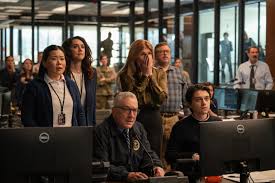
In an era where our lives are increasingly lived behind screens, the nightmare of a total digital blackout is no longer 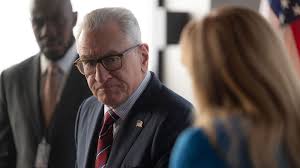 just a sci-fi trope—it’s a chilling possibility. Netflix’s ‘Zero Day’, which premiered on February 20, 2025, has become the definitive political thriller of the mid-2020s. Starring the legendary Robert De Niro in his first-ever lead television role, the series has dominated global streaming charts well into 2026.
Created by Eric Newman (Narcos) and Noah Oppenheim (Jackie), this six-episode limited series isn’t just about hacking; it’s a high-stakes autopsy of truth, power, and the fragility of modern democracy.
The Premise: A Nation in the Dark
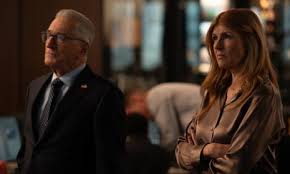 The show kicks off with a “Zero Day” event—a devastating cyberattack that cripples the United States’ power grid, telecommunications, and transportation networks in a matter of minutes. As planes fall from the sky and the country plunges into literal and metaphorical darkness, a single message appears on every smartphone screen: “This will happen again.”
In a desperate bid to restore public trust, the current President, Evelyn Mitchell (Angela Bassett), calls upon the only man the nation still respects: George Mullen (Robert De Niro). Mullen is a popular, single-term former President who walked away from power after a personal tragedy. Now, he is tasked with leading the Zero Day Commission to find the perpetrators before the “second strike” occurs.
A Powerhouse Ensemble Cast
The brilliance of Zero Day lies in its casting, bringing together a lineup of actors that feels like a multi-million dollar feature film.
-
Robert De Niro (George Mullen): De Niro delivers a masterclass in quiet authority. His Mullen is a man grappling with his own fading grip on reality—evidenced by his incoherent journals and hallucinations—while trying to solve a puzzle that could end the world.
-
Angela Bassett (President Mitchell): Bassett provides the perfect foil as the pragmatic, perceptive incumbent who must balance civil liberties against national security.
-
Jesse Plemons (Roger Carlson): Playing Mullen’s former aide and “fixer,” Plemons is typically exceptional as a morally ambiguous man trying to do the right thing for the wrong reasons.
-
Lizzy Caplan (Alexandra Mullen): As Mullen’s daughter and a rising Congresswoman, Caplan represents the friction between her father’s legacy and her own political ambition.
-
Dan Stevens (Evan Green): Stevens is delightfully loathsome as a radical political commentator (think a futuristic hybrid of various cable news firebrands) who becomes Mullen’s loudest critic.
Themes of 2026: Disinformation and “The Grey Zone”
What sets Zero Day apart from other thrillers like Mr. Robot is its focus on “The Grey Zone”—the space where truth and conspiracy overlap. The show explores several prescient themes:
-
Surveillance Capitalism: Through characters like tech mogul Monica Kidder (Gaby Hoffmann), the series asks: Who really owns our data, and can it be used as a weapon against us?
-
Bipartisan Erosion: The show presents a vision of a country so divided that even a massive catastrophe is immediately politicized rather than used as a point of unity.
-
The Human Factor: At its heart, the series is a “dementia drama” disguised as a thriller. Mullen’s search for the “Zero Day” hackers mirrors his own fight against the “Zero Day” of his mind.
Production & Visual Aesthetic
Directed by Lesli Linka Glatter (Homeland), the series uses a “dreary-tech” aesthetic—lots of obsidian blacks, cold silvers, and metallic blues. Filmed primarily in New York, the show captures a sense of urban claustrophobia. The score, composed by Dan Romer, uses uneasy, pulsing synths that mimic the sound of a failing hard drive, keeping the viewer in a constant state of low-level anxiety.
Why It’s Still Trending in 2026
Zero Day has sparked endless dinner-table conversations about cybersecurity and government overreach. While some critics found the writing “ChatGPT-esque” in its use of buzzwords, the audience reception has been overwhelmingly positive. The final twist—revealing that the greatest threat might not be a foreign power, but an internal consolidation of power—has made it a “re-watch” favorite for fans looking for hidden clues.