
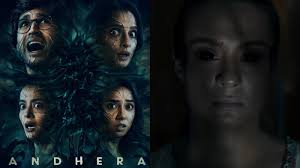
Introduction: Why “Andhera” Stays With You
“Andhera”—literally “darkness”—isn’t just a title. It’s a mood, a flavor, and a lens. This is a neo-noir psychological thriller set in a sleepless metropolis where power failures and moral blackouts run in parallel. The film follows Arjun, a junior crime reporter with a past he avoids and a conscience he can’t shake, as he chases a story that keeps slipping through his fingers like shadow. What begins as a routine crime beat spirals into a layered mystery about identity, guilt, and the human tendency to look away at the very moment we should be seeing clearly.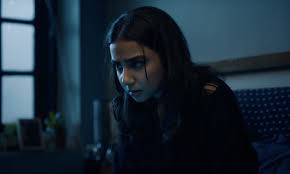
This review breaks down the minute beats—the way a hand hovers over a light switch, the way a door stops just short of closing, the way a distant hum in the soundscape foreshadows violence. It’s crafted for viewers who love the small stuff: blocking, sound motifs, color language, prop continuity, and character micro-choices.
Logline & Premise
- Logline: A young crime reporter races against a citywide blackout to connect a string of disappearances, only to discover the story is closer to him than he ever imagined.
- Premise: In a city that routinely plunges into darkness—literal and moral—seemingly unconnected crimes are tied together by a pattern Arjun can feel but cannot name. As the outages lengthen, so does the shadow of doubt around him.
Minute Details: A Scene-By-Scene Texture (Spoiler-Light)
Opening Minute: The Breath Before Darkness
- 00:00–00:59 — We open on the sound of a ceiling fan, faint traffic, and a fluorescent tube that flickers a little too long. The first shot is a close-up of a light switch—left thumb hovering, not pressing. The camera lingers until you feel the hesitation. In the background, a radio newsreader
 mentions “power rationing.”
 - Prop detail: A chipped enamel mug with a crescent-shaped crack—reappears later as a memory anchor.
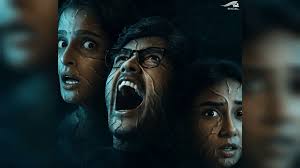 mentions “power rationing.”
The First Walk
- 02:10–04:00 — Arjun steps into a corridor lit by staggered pools of light, each pool slightly cooler than the next, creating a rhythm you’ll subconsciously follow the rest of the film. The elevator mirror shows a smudge (an oval, thumb-shaped), mirrored again at 01:27:45 when another character touches a glass partition.
- Sound motif: A low electrical hum dips out for a millisecond whenever the frame cuts to darkness. It’s a heartbeat for the city.
Crime Desk Choreography
- 07:20–10:00 — The newsroom isn’t a cliché. The camera tracks over-the-shoulder across monitors that reflect only the brightest pixels, so faces are half-lit, half-hidden. Arjun’s desk lamp flickers once, then steadies—his editor’s doesn’t, telling you everything about stability and power dynamics without dialogue.
- Micro-gesture: Arjun keeps his left hand near a pocket recorder; he taps twice when feigning confidence.
First Clue: The Photo That Doesn’t Want To Be Seen
- 14:40–18:10 — A missing-person photo—the eyes slightly off-center; someone has cropped out a wristband with a barcode-like pattern. Arjun notices the uneven crop, not the missing person’s smile. His attention to negative space becomes a theme.
The Power Cut That Changes the Pace
- 21:00–24:30 — Citywide blackout. The sound design thickens: no traffic bed, just dogs barking and distant generators. Arjun’s phone screen becomes a light source; the camera uses it to paint planes on his face. The screen brightness slider is visible—and watch how it lowers when he tells himself he doesn’t want to see something.
Middle Build: Red Threads in a Grey Room
- 43:20–46:00 — A corkboard with red threads. But unlike the trope, the threads connect power substation outage maps to neighborhood notice boards. Small printed notes include dates with missing digits—the printer ribbon is fading. These “missing digits” echo missing people.
- Prop continuity: A faded metro card in Arjun’s wallet has its magnetic strip peeling at the corner—the same corner that later hooks a note.
The Apartment Across the Courtyard
- 56:10–59:00 — Arjun watches a window opposite his building. A silhouette repeats the same action: draws curtains, opens them halfway, stands perfectly still. On the third repetition, a pendulum clock ticks out of rhythm. The off-beat tick recurs in the score when Arjun lies.
The Confession That Isn’t
- 1:07:30–1:10:00 — A witness “confesses” in darkness, lit only by a cigarette. The ember flares on certain words: “signal,” “cut,” “night.” When Arjun asks a direct question, the cigarette is stubbed out, cutting the only light—truth ends when light ends.
The Mirror Scene: Identity & Doubles
- 1:18:00–1:20:00 — In a public washroom, fluorescent lights buzz and fail. For a second, Arjun’s reflection lags by a fraction—it’s a practical effect with alternating light sources. He wet-combs his hair; the reflection does it a beat later. Andhera literalizes the fear of being out of sync with yourself.
Final Act: The Generator Room
- 1:34:00–1:38:00 — A generator room with yellow hazard paint scuffed in concentric arcs—evidence of repeated turning. The camera circles anti-clockwise; the score shifts to a single sustained note. Loose wiring braids in threes; a fourth wire trails, never touching—signifying a missing link.
The Last Look
- 1:48:30–1:49:59 — Daylight finally holds. Arjun steps outside; a neighborhood child tries the light switch on a porch lamp at noon. It does not turn on—because light is not only electricity; it’s understanding. Arjun half-smiles, not with relief but recognition.
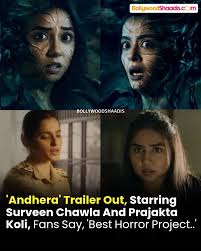 turn on—because light is not only electricity; it’s understanding. Arjun half-smiles, not with relief but recognition.
Characters & Performances (Without Spoilers)
- Arjun (Protagonist): A reporter who mistakes curiosity for courage. The performance is minimal—watch the throat swallow before questions he doesn’t want to ask.
- Editor: A paternal cynic; keeps a portable light on his desk that never runs out—he is the illusion of control.
- Neighbor Across the Courtyard: A daily-life metronome who becomes Arjun’s mirror. Very little dialogue; everything is posture.
- The Witness: Speech patterns broken by sound cues; often speaks in the dark, making you question the reliability of what you hear when you cannot see.
- The City: Treated as a character—blackouts rearrange behavior, schedules, and secrets.
Craft: Cinematography, Sound, Color, and Blocking
- Cinematography: The camera treats light like a prop. Hard cuts to black are used as punctuation rather than jump scares. Frame edges are active—notice clues tucked into the last 10% of the image.
- Color Language: A palette of slate, teal, sodium-vapor yellow. Red appears only for links—threads, LEDs, standby lights, recording dots—anything that connects.
- Blocking: People are often obstructed by columns, grills, and window frames. The eye line is interrupted; conversations happen around corners more than across tables.
- Lens Choices: Frequent use of 35mm equivalents for intimacy in tight spaces; occasional longer lenses flattening alleyways, compressing distance to trap characters.
Soundtrack & Sound Design
- Score: Understated, built on drones that disappear just as you begin to register them—like memory.
- Diegetic Sound: Fans, inverters, generators, battery beeps—sonic reminders that light is mechanical, fragile.
- Motifs: The electrical hum that drops when cuts occur; the off-beat pendulum; the phone slider sound snipped mid-swipe.
Themes & Symbolism
- Seeing vs. Not Seeing: Light switches, curtains, phone brightness—small levers of vision.
- Power & Powerlessness: Outages echo the power dynamics in the newsroom and the investigation.
- Memory as Darkness: The chipped enamel mug and metro card corners recur as memory handles.
- Connectivity: Red threads, wires, barcode wristbands—objects that promise connection but often mark control.
The Editing Rhythm: How “Andhera” Breathes
Cuts often follow sound, not action. Conversations end on the hum of a transformer or the soft exhale of a cigarette. When the plot accelerates, the film paradoxically holds longer on inanimate details—a map pin, a blinking standby light—so that you, like Arjun, learn to read the margins.
The Ending (No Spoilers): What It Leaves You With
It’s not a twist that redefines the past; it’s a re-focusing that clarifies what you were already shown. The final minutes invite you to reconsider every small prop you dismissed: the smudge on the mirror, the incomplete dates, the trailing wire. Andhera argues that we are not betrayed by the dark; we are betrayed by our refusal to look closely when the lights are still on.
Who Will Love “Andhera”
- Fans of slow-burn neo-noir with psychological edges
- Viewers who enjoy sound-led storytelling and practical lighting
- Readers of detective fiction who love pattern recognition and non-verbal clues
“Andhera” is a meticulously crafted Hindi neo-noir thriller that uses citywide blackouts to explore moral ambiguity. With precision cinematography, texture-rich sound design, and symbolic props, it rewards attentive viewing. Rather than lean on jump scares, it builds dread from what you almost see. If you love visual storytelling that turns light switches and phone screens into plot devices, Andhera is your film.
Viewing Tips: Make the Most of the Minute Details
- Watch with good headphones—low-frequency hums matter.
- If streaming, disable “auto-brightness” on your display; the film uses intentional low-luminance.
- Rewatch key sequences: the newsroom lamp behavior (7–10 min), the courtyard window ritual (56–59 min), and the generator room circle (1:34–1:38).
Final Word
“Andhera” understands that darkness isn’t an absence; it’s a presence that shapes how we listen, remember, and misremember. By anchoring its mystery in tiny, tactile details—scuffed hazard paint, peeling metro cards, misaligned crops—the film turns the act of paying attention into the real plot. Watch it with patience and a quiet room; you’ll come away alert to every flicker in your own.